The vine enters a phase of dormancy, a period of vegetative rest. This rest is essential for restoring reserves in the roots and preparing budbreak, when the vegetative and floral buds begin to develop.
Did you know? Even when the vines seem asleep, they continue working underground, where the roots store nutrients for the following season.
Pruning
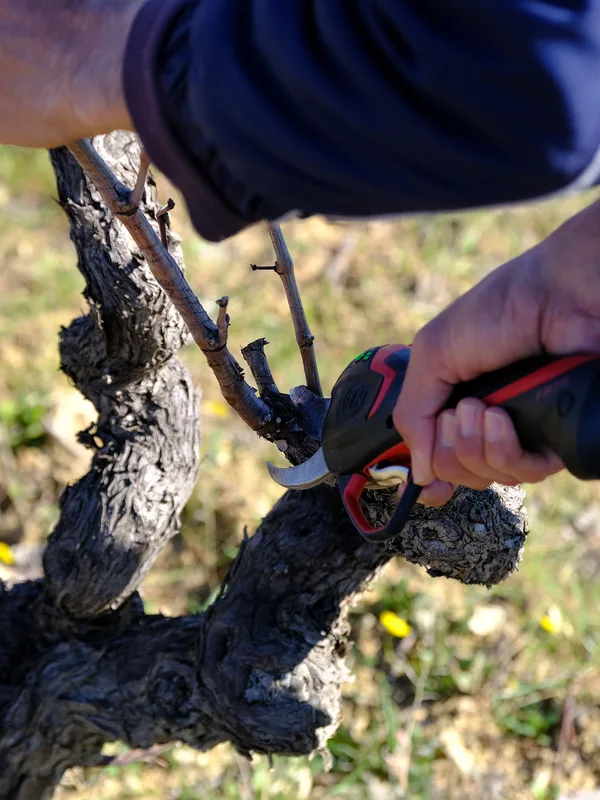
In January, our pruning shears take center stage. In the vineyard, the team has picked them up again. Pruning begins patiently, vine by vine, plant after plant. It is long, precise and essential work: choosing the canes, controlling the vigor of the plant and preparing the future harvest.
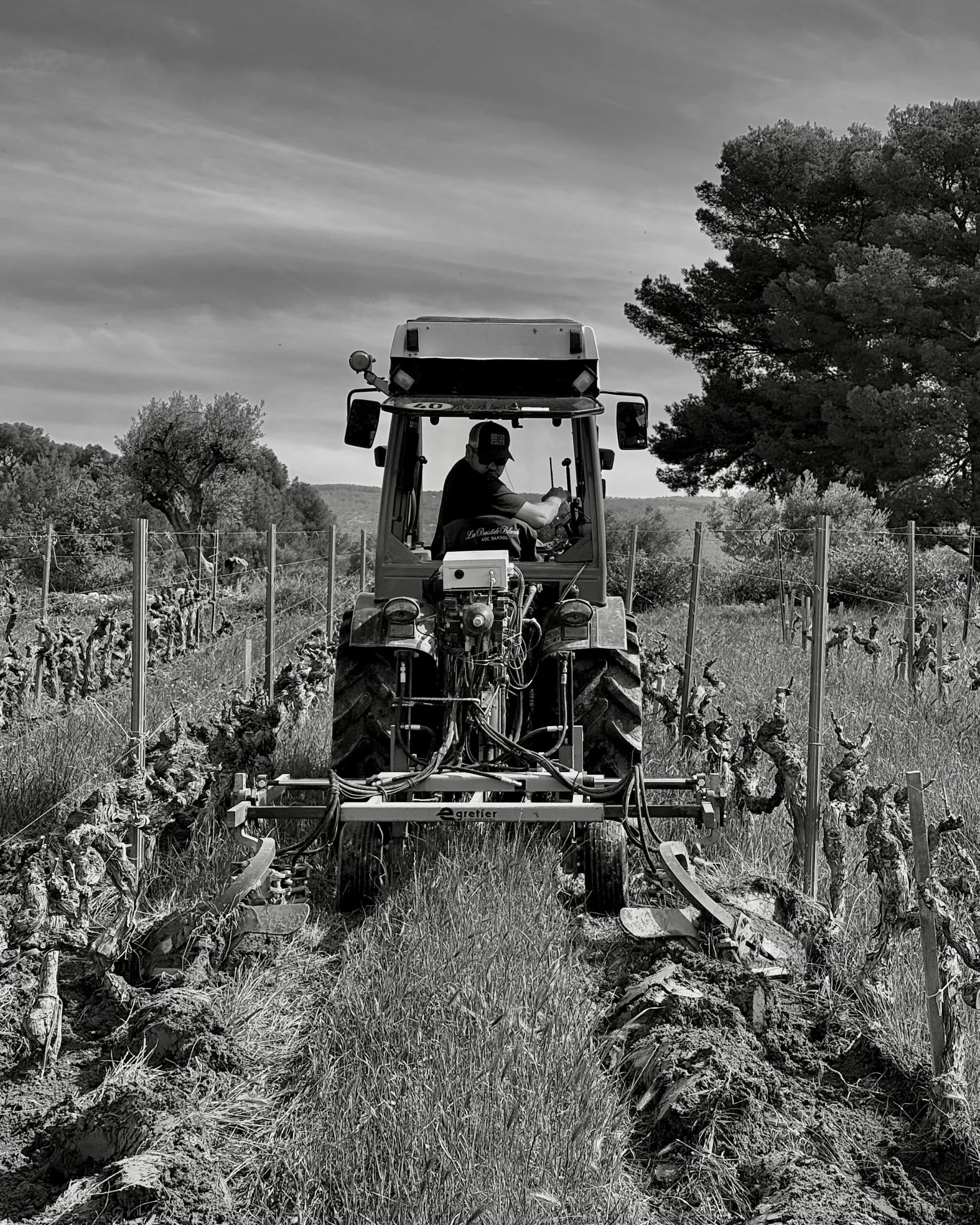
The heavy rains this month have made the soils dense and sometimes difficult to access. We have to move carefully, respect the ground and wait for it to dry in places. But water remains a precious resource for the vines, which will benefit from it in spring. Every cut matters, because pruning determines the balance of the vine, the quality of the grapes and therefore the wine. Under the winter sky, the estate moves at another pace, slower in appearance but essential in intensity.
Why prune?
Pruning is a key step in regulating production by selecting the branches that will carry the year's bunches, helping optimize the harvest. It also preserves vine health by encouraging good sap circulation and limiting disease. Finally, it supports grape quality by reducing the number of bunches, giving more concentrated and balanced fruit.